
Equinox Group: How project-level carbon reporting is backing up better exhibition practice
How consistent measurement with TRACE has strengthened Equinox Group’s decision-making, client conversations and responses to tenders
12
Destination Canada projects measured using one consistent methodology
The benefit is that it makes you more confident in what you’re saying about your company or what you’re saying about the individual project.
Megan Moran, Project Manager, Equinox Group
Equinox Group has designed and built exhibition stands for more than 40 years. Reuse, refurbishment and long-term asset management have shaped how the business works for much of that time, supported by investment in modular exhibition systems, renewable energy and dedicated storage facilities.
What it lacked was a consistent way to show the impact of those choices. When Destination Canada asked Equinox to measure the environmental performance of its exhibition programme, the team began reporting on each project with TRACE. Around a dozen Destination Canada projects later, TRACE reporting is part of how Equinox responds to client requests and tenders.
The results largely confirmed what the team expected. Their value has been in turning established practice into evidence: showing where impacts consistently arise, supporting investment in a lower-impact fleet, and giving project teams firmer ground when discussing the trade-offs between cost, logistics and emissions with clients.
The challenge
By the time Equinox started using TRACE, its sustainability practices were well established. Biomass heating, on-site renewable energy and long-term storage meant exhibition assets could be refurbished and reused across many projects, a long-term approach to making better use of materials rather than a response to any one reporting requirement.
Like most exhibition contractors, Equinox also has to balance those practices against commercial realities. The business needs to remain profitable and support its own manufacturing operations, so decisions have to work operationally and financially for both Equinox and its clients.
As client expectations shifted, Equinox needed to demonstrate the impact of its practices as well as describe them. Destination Canada accelerated that shift by asking Equinox to measure its exhibition programme as part of its own net zero ambitions.
It soon became clear this wasn’t a one-off request. Similar conversations were becoming more common across the exhibitions sector, and Equinox needed a repeatable methodology that could be applied across projects and give clients credible, comparable information.
What the data showed
The first TRACE reports largely confirmed what Equinox expected. Years of investment in reuse and long-life assets meant there were no unexpected hotspots. Instead, the reports gave the team a clearer picture of where impacts occurred and how they compared across projects.
Transport consistently emerged as one of the largest contributors, reflecting the reality of delivering stands across multiple locations.
The reports also showed where data quality could improve, particularly where Equinox depended on external sources such as venue energy data, or where material classifications could be more specific. Improving these will make future reports more accurate and more comparable.
Repeated reporting has had a further effect on the team. Collecting data during delivery keeps environmental impact in view throughout a project, rather than only at the end.
Decisions made
“It definitely supported the decision-making in terms of upgrading our fleet vehicles to lower impact alternatives. Then we also had information to share that better approach to logistics and transport with our clients.”
Danny Vento, Director, Equinox Group
With transport consistently among the largest impacts, TRACE data strengthened the case for upgrading Equinox’s fleet to lower-impact vehicles. It also gave the team evidence to explain the reasoning behind that investment to clients.
The reporting reinforced existing work on graphics. Equinox encourages clients to retain graphics between events wherever possible, reducing unnecessary reprinting, and continues to invest in reusable tension fabric graphics and modular aluminium exhibition systems designed to be refurbished and reused across clients and sectors.
The data has also changed how Equinox discusses cost with clients. Sustainability conversations increasingly cover the different costs of different delivery approaches, and TRACE gives project teams firmer ground when explaining the environmental implications of each. That doesn’t mean the lowest-carbon option always wins. For example, a client might choose a longer flight because it was cheaper, despite the higher carbon impact. What’s changed is that the trade-off is visible when the decision is made.
TRACE has now been used across multiple client programmes and forms part of Equinox’s wider sustainability offer and its responses to requests for proposals. As reporting becomes a more common expectation across the exhibitions industry, Equinox plans to keep improving the quality of its underlying data and build a richer evidence base over time, strengthening both its own decision-making and its conversations with clients.
See more success stories
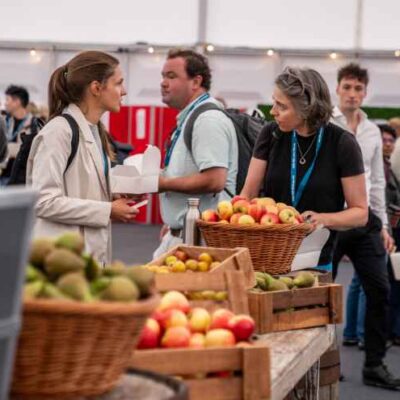
How event carbon measurement is helping the University of Birmingham prioritise action, support clients and build a stronger evidence base for sustainable events
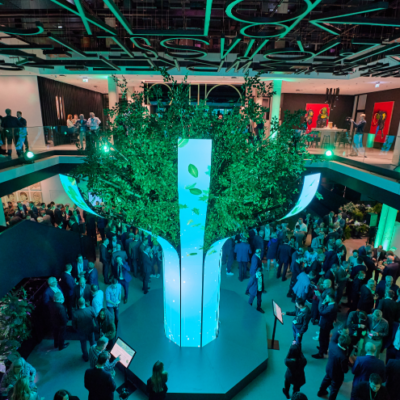
An insight into how Jack Morton uses data-driven design to deliver lower-carbon event experiences

Showcasing art and sustainability with ‘The Dalmore Presents…’ by Chorus Arts
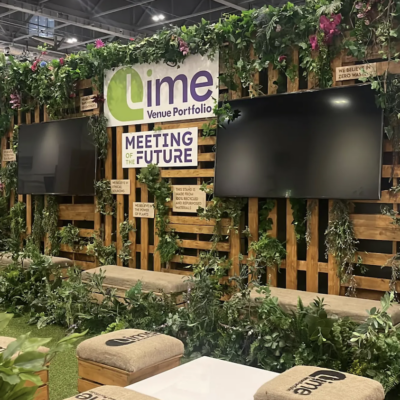
How Lime Venue Portfolio measured the carbon emissions of their exhibition stand with TRACE
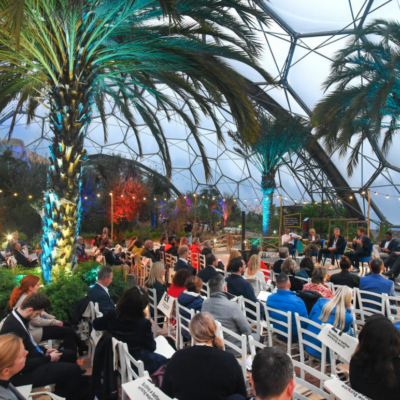
‘Inspiring a better Britain’: how TRO delivered for the inaugural edition of Anthropy with TRACE
Factory 42 put the ‘Green’ in BBC Studios The Green Planet AR Experience with TRACE